
Wyndspelle Cottage Hand-Poured Candle | 16 oz
Wyndspelle Cottage
THE COTTAGE COLLECTION
Hand-poured candles inspired by Tennessee mountain mornings, old-world kitchens, and the comfort of home.
Shop the candlesMADE FOR HOME
Wyndspelle Cottage
WYNDSPELLE HERITAGE FARM
A farm's name is usually the first thing anyone hears
about it, and often the last thing anyone thinks to explain. This short piece
sets down, in one place, what “Wyndspelle” actually means, where its two halves
come from, and why the word fits this particular farm on this particular ridge
of the Cumberland Plateau. It is written to stand alongside the business plan
as a brand and founder's-story reference — useful for grant narratives,
marketing copy, signage, or simply for answering the question every visitor
eventually asks.
A note on method: what follows is a faithful reading of
the name's etymology and a considered case for why it suits this operation —
not a claim to a documented founding legend. No record of the exact moment or
reasoning behind the name's original selection was available to draw from, and
this piece does not invent one. It offers real linguistic history and a real
thematic fit, laid out honestly as interpretation.
The Name
Itself — Two Old Words, Joined
“Wyndspelle” is a compound of two genuine, separately
documented English words, each carrying more history than its everyday use
suggests.
Wynd
A wynd is not “wind” in the sense of moving air — it is
a distinct word, inherited from Scots and northern English dialect, meaning a
narrow, winding lane: the kind of path that bends off a main road, threading
between buildings or up a hillside rather than running straight. The word
survives most visibly today in the street names of Edinburgh's Old Town, where
dozens of wynds still connect the Royal Mile to the closes and courtyards
behind it. It comes from the same root as “wind” the verb — to turn, to bend,
to follow a course that curves with the land instead of cutting across it.
Spelle
Spelle is older and carries more weight than its modern,
narrower sense of a magic charm. In Old English, “spelle” simply meant a story,
a telling, an account carried by speech — it is the very root buried inside
“gospel,” which is nothing more than gōdspel, “the good story.” Only later, in
Middle English, did the word narrow toward incantation — words spoken with the
power to work a change in the world. Both senses are still alive inside it
today: a spelle is a tale handed down, and a spelle is also an act, words
spoken with intention that do something.
Put the two together and “Wyndspelle” reads as something
close to “the tale carried down the winding way” — a story that does not arrive
by the straight road, but by the old, bending path, passed from one hand to the
next the way a farm, a bloodline, or a family history actually moves through
time.
“The
tale carried down the winding way.”
Historical Context — The Cumberland Plateau
Both halves of the name have a genuine home in the
history of this region. The Cumberland Plateau and the hollows of Grundy County
were settled substantially by Scots-Irish and English migrants moving south and
west through the Appalachians in the eighteenth and nineteenth centuries — the
same population that carried words like “wynd” out of Lowland Scotland and
northern England and into the everyday speech of the Southern mountains.
Appalachian English is well documented by linguists as unusually conservative:
it retained older vocabulary, pronunciations, and turns of phrase for
generations after they had faded from use elsewhere, effectively preserving
small pieces of an older linguistic world inside ordinary mountain speech.
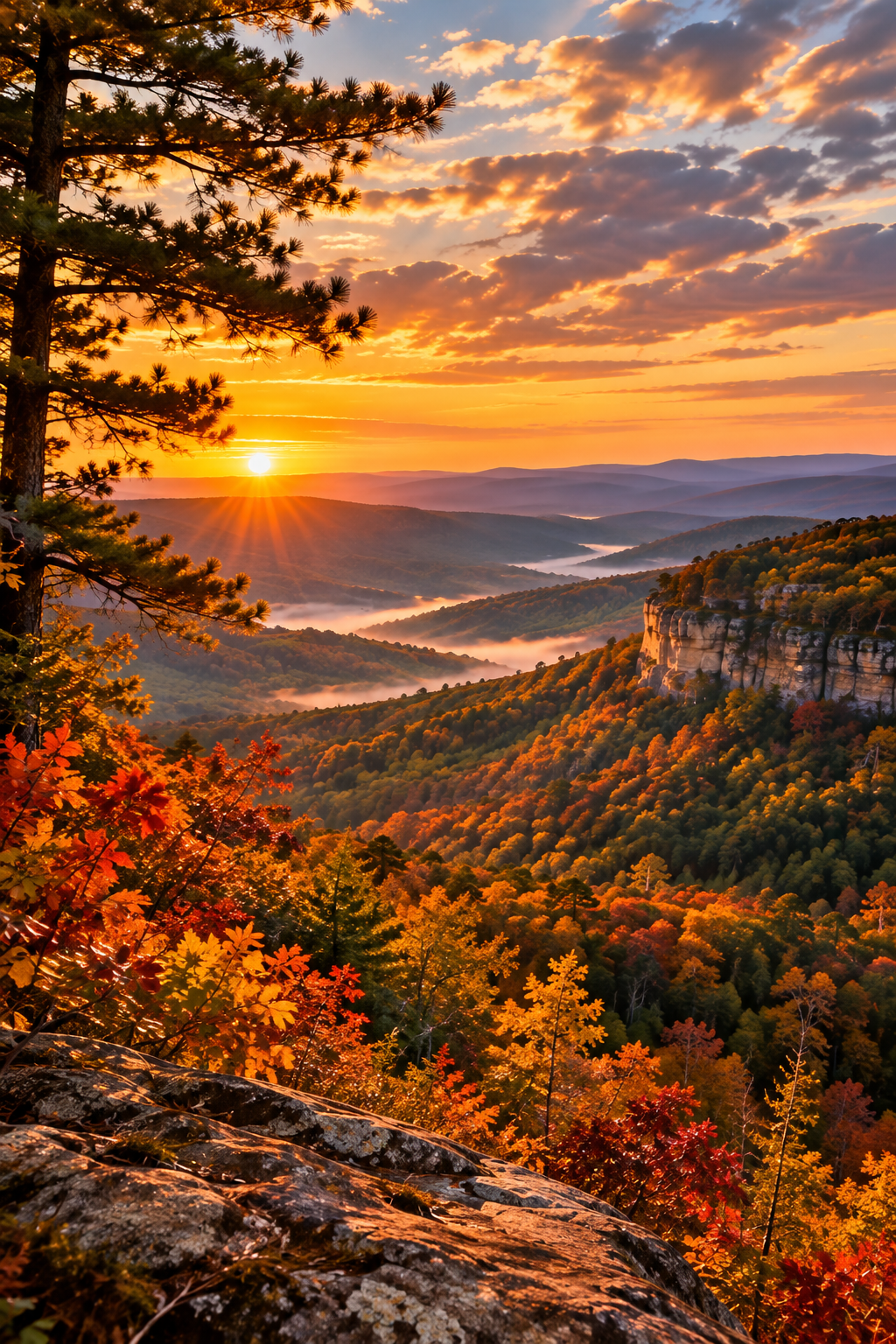
The physical landscape reinforces the fit. A
ridge-and-hollow farm on the Plateau is not reached by a straight line — it
sits at the end of a road that climbs, doubles back, and follows the contour of
the land, exactly the kind of path a wynd describes. And the same settlers who
used that word also carried with them a strong oral culture: ballads, family
stories, remedies, and blessings passed down by telling rather than by writing
— spelles in the oldest sense, stories kept alive because someone chose,
generation after generation, to keep telling them.
Spiritual Meaning — Land as Something Spoken Over
Read together, “Wyndspelle
” suggests a way of holding land that is less about
ownership and more about stewardship — a place tended and spoken over, rather
than simply possessed. Wind, in the older folk imagination, is often a carrier:
of weather, of change, of voices and memory moving across a landscape. A “spelle”
cast by continuity — by the daily, repeated, unglamorous acts of care that keep
a farm alive from one season to the next — is not far from how many working
farms have always understood their own labor, whether or not they used that
language for it.
In that light, feeding stock at first light, mending a
fence line, keeping faith with an old breed through a hard winter — these are
not just chores. They are the discipline of words and work that keeps a story
from going quiet. A name built from “story” and “winding path” fits a farm
whose actual daily practice is exactly that: a long, bending continuity of
care, not a single dramatic act of founding.
Heritage
Connection — Conservation as an Ongoing Story
The name sits naturally beside “Heritage Farm and
Conservatory” because heritage-breed conservation is, quite literally, the
business of keeping a story going. Sussex and Buff Orpington chickens and
Saxony ducks are included in this operation in part because of their standing
on the Livestock Conservancy's Conservation Priority List — bloodlines that
persist only because someone, somewhere, keeps choosing to breed them forward
rather than let the line end. That is a wynd-and-spelle activity in the most
direct sense: a winding, generational path walked in order to keep a genetic
and cultural story from being lost.
Even the plan's more practical departures fit the theme
rather than breaking it. Katahdin sheep and Boer goats were selected for market
speed and turnaround rather than Conservation Priority List status — a
deliberate bend in the path, chosen because the land and the plan's practical
needs called for it, not because the operation follows a single straight
doctrine. A wynd, after all, is defined by exactly that: a course that turns
with real terrain instead of insisting on a straight line through it.
For a veteran taking up stewardship of this ground,
there is a further layer worth naming directly: a return to tending rather than
to disruption, to continuity rather than conquest — its own kind of homecoming
story, carried, like the rest of it, down the winding way.
Wyndspelle Cottage — Carrying the Story
into the Home
Wyndspelle
Cottage extends the farm’s story from the field and barn into the home. The
name suggests a quieter, more intimate expression of the same values: useful
things made with care, rooted in place, and intended to become part of daily
ritual. Where Wyndspelle Heritage Farm preserves living bloodlines and working
traditions, Wyndspelle Cottage can preserve the atmosphere of that life—the
sense of warmth, welcome, memory, and season carried indoors.
Candles
are a natural centerpiece for that idea. Their purpose is simple and old: to
bring light, mark time, soften a room, and create a small pause in the day.
Fragrance can also hold a story of place—woodsmoke, herbs, orchard fruit, rain,
cedar, honey, or the changing seasons of the Plateau. In that sense, a candle
is more than a decorative object. It is a practical item that carries memory
and mood, much as the word “spelle” carries both a telling and an act of
intention.
Other
cottage goods can follow the same standard: small-batch soaps, salves, wax
goods, dried botanical pieces, textiles, kitchen and pantry items, or seasonal
homewares chosen because they are useful, enduring, and connected to the land.
The purpose is not to add unrelated merchandise, but to offer tangible pieces
of the Wyndspelle story—objects that feel at home beside a hearth, on a kitchen
shelf, or in the hands of someone who values craft, heritage, and a slower,
more deliberate way of living.
THE WYNDSpelle WAY